


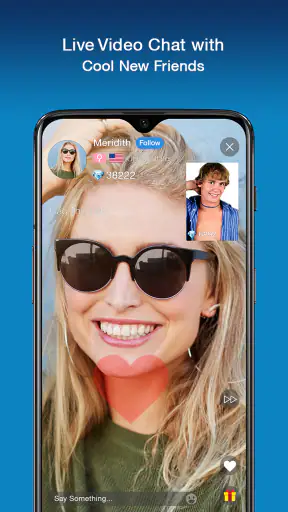
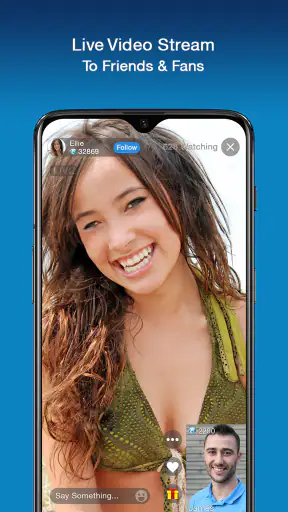
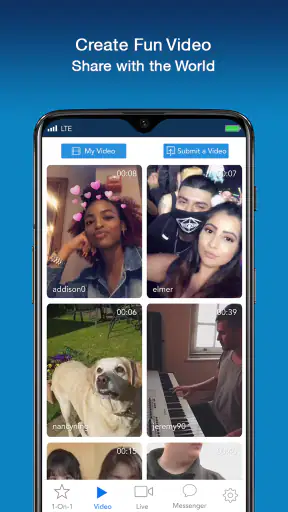
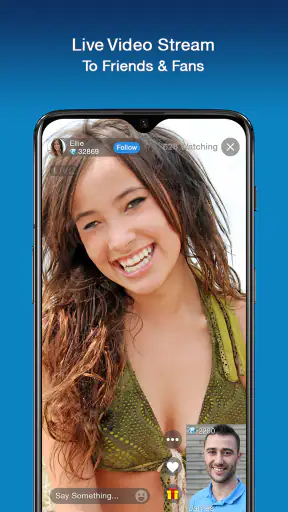
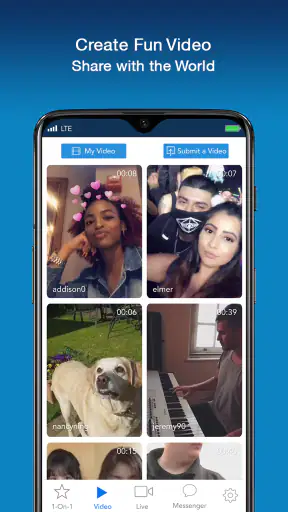
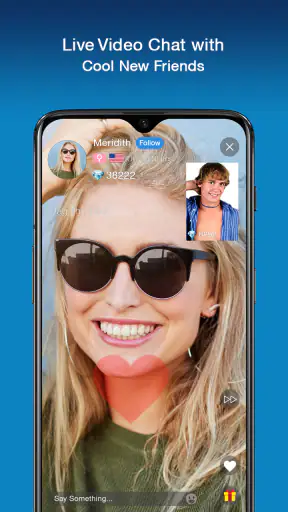
Cake Live Stream Video Chat is a social app built around live broadcasts, video conversations, and meeting people from different parts of the world. I approached it less like a traditional messaging service and more like a public room that happens to include private conversation tools. That distinction matters: the experience depends heavily on how comfortable you are with open social interaction, unfamiliar users, and a mature audience.
After spending time with the app, my impression is mixed but fairly clear. It can be entertaining when I want a quick stream to watch or a casual conversation outside my usual circle, yet it demands more attention than a conventional chat app. The developer is Net Tangerine, and the app is free to install, with optional purchases ranging from $0.99 to $199.99 per item. I would not treat that pricing range as a minor detail, especially in a service designed around social attention and live interaction.
The app has been available since December 15, 2016, and its current version is 3.6.4. It requires Android 8.0 or later, carries a Mature 17+ rating, and has passed one million installs. Its average score is 3.3 from around 18 thousand ratings, with roughly 1.7 thousand written reviews. Those figures suggest a sizeable audience, but also a user experience that will not suit everyone equally.
What the live-stream format feels like in everyday use
The first thing I noticed is that Cake Live Stream Video Chat is organized around presence rather than delayed conversation. Instead of opening the app mainly to answer messages, I would open it to see who was live, decide whether a broadcast looked interesting, and then choose whether to remain a viewer or interact more directly. That makes the app feel spontaneous, but it also means the quality of a session can change quickly depending on who is online.
A typical use case is simple. Imagine finishing work or school and wanting ten minutes of low-effort social activity. I could browse live content, watch a creator or participant for a while, and move on without building a long-term relationship. The format works well for that kind of lightweight break. It is less suitable when I need a reliable conversation with a friend, because live rooms are shaped by timing, audience behavior, and the willingness of another person to respond.
The international angle is one of the app’s more interesting strengths. Meeting people from other countries can expose me to different accents, humor, routines, and viewpoints without requiring a formal language-exchange plan. At the same time, cultural differences can make tone harder to read. A joke that feels harmless in one setting may be misunderstood in another, and fast-moving live conversations leave little time to clarify intent.
I would describe the experience as more unpredictable than Instagram-style social browsing and more public-facing than a normal one-to-one messenger. Traditional messaging apps are better when I already know who I want to contact. Large social networks are usually better for following established accounts and revisiting familiar posts. Cake Live Stream Video Chat makes more sense when discovery and direct interaction are the reason I am opening the app.
That difference also creates the main trade-off. The app can feel lively because I am not limited to my existing contacts, but the same openness can bring uneven conversations. Some sessions may feel welcoming and relaxed, while others may be noisy, awkward, or simply not worth my time. I found that the best approach is to treat each room as temporary rather than assuming every interaction will become a meaningful friendship.
Who is likely to enjoy it
I think the app is a reasonable fit for adults who enjoy live social spaces and do not mind starting conversations with strangers. It may appeal to someone who wants casual international contact, a way to pass time while watching broadcasts, or a social environment that feels more immediate than posting and waiting for replies.
It is also potentially useful for people who prefer seeing and hearing another person instead of relying entirely on text. Video can make interaction feel warmer, but it also increases the pressure to appear on camera, respond quickly, and manage personal boundaries in real time. Anyone who dislikes that pressure may find a text-first service more comfortable.
I would skip it if I wanted a quiet, tightly controlled community, a private family messenger, or a professional networking tool. The Mature 17+ rating is important here. Parents should not treat the app as a general-purpose social space for younger teenagers, and adults should remember that age labeling does not remove the need for personal caution.
Trust starts with what I can actually verify
When I assess a live social app, I do not decide whether it is trustworthy from its visual style or from the number of people using it. I look for practical control: can I decide when to participate, can I avoid sharing more than intended, and can I leave an interaction without feeling trapped? With this app, those questions are more important than the promise of meeting people worldwide.
The visible facts establish a free app from Net Tangerine with optional in-app purchases and a mature age classification. They do not, by themselves, tell me how every personal-data decision works in every situation. So I would avoid assuming that a free download is cost-free in practice or that a live conversation is private simply because it feels personal.
My rule is straightforward: I use a separate social identity, avoid placing sensitive details in a profile, and do not treat a friendly stranger as a verified contact. I would not share a home address, workplace schedule, financial information, travel plans, or documents during a live conversation. That advice is not specific to one bad interaction; it is the sensible baseline for any service where strangers can meet through video.
The most useful trust feature is not a promise of safety; it is the ability to limit what I reveal and leave quickly. I keep that principle in mind whenever I enter a broadcast or begin a video chat. If a conversation becomes uncomfortable, I do not negotiate for permission to end it. I exit, stop responding, and use the available account controls that fit the situation.
How I would handle account and privacy choices
Before becoming active, I would spend a few minutes reviewing every visible profile and account option. I would check what information is displayed publicly, whether a profile can be edited or removed, and how the app handles unwanted contact. I would also look at notification settings, because frequent alerts can pull me back into a social service more often than I intended.
I would be especially careful during the first session. Rather than uploading a detailed biography or using a recognizable username, I would begin with the minimum information needed to participate. That gives me room to understand the community before making myself easy to identify. A profile can always become more personal later; reversing an oversharing decision is much harder.
For video chat, I would make a deliberate choice about the background and camera angle. A room can reveal more than I realize, including family photographs, school materials, location clues, or a daily routine. If I only want to test the conversation, I would start with audio or keep the camera off when the app allows that choice. I would never assume that a pleasant conversation justifies showing my surroundings.
Another practical habit is separating social spending from ordinary communication. Since purchases can reach $199.99 per item, I would not tap through payment prompts casually. I would set a personal limit before using any paid option, confirm what I am buying, and keep purchase authentication active on the device. Younger family members should not have unrestricted access to a payment method while using a mature social app.
Where data sensitivity becomes a real issue
Live interaction creates a different kind of privacy risk from ordinary posting. With a static post, I can reread what I wrote and reconsider it. In a live room, I may answer quickly, react emotionally, or reveal something without noticing. Video adds visual information, while voice adds details about my surroundings and identity. I therefore treat every live exchange as potentially more revealing than a short text message.
I would be cautious with requests to move a conversation elsewhere, send money, buy a digital item, or prove identity through a document or personal account. A person who becomes friendly quickly is still a stranger. The international nature of the app can make verification more difficult because language, time zones, and cultural expectations vary. If a request creates urgency, I take that as a reason to slow down rather than comply.
There is also a social-data concern that is easy to overlook: patterns. Even without stating an address, repeated conversations at the same time can reveal a routine. Mentioning a commute, a regular class, or an upcoming trip can build a recognizable picture when combined with public profile details. I would avoid giving away those pieces gradually, because small disclosures can become identifying when viewed together.
For that reason, I would not use the app as a diary or a substitute for professional support. A live stranger may listen sympathetically, but that does not make the conversation confidential, qualified, or appropriate for sensitive mental-health, legal, or financial decisions. The app is better for casual social contact than for problems that require accountability and privacy.
Useful habits that improve the experience
My first practical tip is to observe before participating. I would spend a few minutes watching how a room behaves, whether the conversation is respectful, and whether the host or participants pressure viewers to respond or spend. This small pause helps separate a genuinely enjoyable space from one that relies on urgency or uncomfortable attention.
My second tip is to keep a clean boundary between public discovery and private contact. I would not move directly from watching a broadcast to sharing personal contact information. I would let trust develop slowly, and I would use a neutral username that is not connected to my main email address or other public profiles. That makes it easier to leave without carrying the interaction into the rest of my online life.
My third tip is to decide what success means before opening the app. If my goal is simply to watch something for a few minutes, I do not need to join every conversation or answer every invitation. If my goal is meeting people from another country, I would prepare a few neutral questions and avoid treating instant chemistry as proof of a genuine connection. A clear purpose reduces impulsive choices.
My fourth tip concerns spending. I would regard paid interactions as optional entertainment, not as a way to earn attention or friendship. If a conversation becomes warmer only after a purchase, I would step back and reassess it. The broad purchase range makes this especially important for users who are easily drawn into repeated small payments that become expensive over time.
Finally, I would use a short exit routine. If I encounter pressure, insults, suspicious requests, or repeated unwanted contact, I would stop engaging, leave the room, review the profile and account controls, and block or report the user if those options are available. I would not continue arguing in public, because confrontation often gives the unwanted interaction more attention.
How it compares with familiar social alternatives
Compared with a standard messenger, Cake Live Stream Video Chat is better for meeting people outside my existing circle but worse for dependable private communication. A messenger gives me a known contact list and a clearer expectation of who can reach me. This app offers more discovery, but discovery brings more uncertainty.
Compared with a large video platform, it feels more interaction-oriented. I am not only consuming a polished video; the appeal is the possibility of direct social exchange. That can feel more personal, but it also means that moderation, boundaries, and personal judgment matter more than they would while watching ordinary recorded content.
Compared with a dating-focused service, the app seems broader in purpose. I would not join it assuming that every interaction is romantic or that another user owes me a relationship. That can be refreshing for casual friendship, but anyone seeking carefully filtered matches and detailed compatibility tools may prefer a dedicated dating platform.
Compared with a private community app, it offers less predictability. A small group with known rules may be better for vulnerable discussions, hobby collaboration, or ongoing friendships. Cake Live Stream Video Chat is more suitable when I value variety and immediacy over a stable social structure.
Performance expectations and practical setup
The Android requirement of version 8.0 or later makes the app accessible on many devices, though access to the app does not guarantee an equally comfortable video experience on every phone. Live video depends on a stable connection, a usable microphone, and enough battery for sustained interaction. I would test it on Wi-Fi first and check whether the phone becomes warm or drains quickly before planning a long session.
I would also review notification behavior after installation. Live services can become distracting when alerts arrive at inconvenient times. Turning off nonessential notifications is not a rejection of the app; it is a way to make sure I open it intentionally instead of reacting automatically. This is particularly useful when the app is being used as occasional entertainment rather than as a primary communication channel.
The free entry point makes experimenting easy, but the mature rating and purchase options mean I would set expectations before handing the phone to someone else. I would keep device-level purchase confirmation enabled and explain that social attention is not something that needs to be bought. That simple conversation can prevent a casual experiment from turning into an unexpected charge.
My cautious verdict after weighing the trade-offs
I see Cake Live Stream Video Chat as a niche social tool rather than an all-purpose communication app. Its value comes from live discovery, video contact, and the chance to meet people beyond my normal network. When I use it with modest expectations, limited profile information, and firm spending boundaries, it can provide an interesting change from familiar feeds and message threads.
Its weaknesses are equally important. The open-ended format can produce uneven conversations, and live video creates more opportunities to reveal personal information than text-based socializing. The 3.3 average from around 18 thousand ratings reflects a product that has found an audience but may leave many users unconvinced. I would read that as a reason to try it carefully, not as an automatic rejection.
I would recommend it to an adult who enjoys spontaneous social contact and is comfortable managing boundaries without expecting the app to do all the work. I would not recommend it to a minor, someone seeking a tightly moderated private community, or anyone who is uncomfortable with live video and optional spending. For those users, a conventional messenger or a smaller interest-based community is likely to be a better match.
Overall, Cake Live Stream Video Chat is worth a cautious trial if its live, international format genuinely appeals to you. I would start slowly, reveal very little, avoid financial pressure, and judge the app by the quality of actual interactions rather than by the promise of making friends everywhere. Used that way, it can be a lively social diversion; used carelessly, its openness becomes the main drawback.


